
Will it rain today? A useful rainfall rain radar map for the UK. You can easily pan and zoom on the map to view the exact local rainfall.

October 26, 2026More strong winds are forecast after Storms Boelo and Austen cause travel disruption, flooding and kill two people
About 90,000 properties across northern parts of the UK are still without power after a weekend of stormy weather, with forecasters warning of more strong winds to come.
Two men were killed by falling trees after two named storms, Austen and Boelo, pummelled parts of the UK, bringing widespread travel disruption, flooding, power cuts and event cancellations.
Continue reading… [...]
Read more...
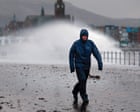
October 25, 2026Met Office reports gusts of 80mph in exposed coastal spots and advises people in affected areas to stay indoors
Strong winds have battered Scotland, Northern Ireland and northern England overnight as Storm Boelo hit the UK.
It was the second named storm in as many days, after Storm Austen brought strong winds to parts of the UK on Friday. The Met Office said wind speeds reached 60-70mph, affecting areas in an amber warning zone that came into force at 9pm on Saturday.
Continue reading… [...]
Read more...
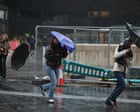
October 24, 2026Fresh deluge of wet weather comes after Storm Austen brought strong winds to many regions on Friday
Amber weather warnings have come into force as the worst of Storm Boelo could be set to hit parts of the UK.
Storm Boelo’s winds will peak from Saturday evening, leaving areas in the warning zone, including Scotland, parts of Northern Ireland and the far north of England, braced for gusts of 60-70mph and even 80mph in exposed coastal spots, the Met Office said.
Continue reading… [...]
Read more...
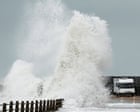
October 24, 2026Second named storm in as many days will hit northern parts of UK as thousands remain without power after Friday’s Storm Austen
The UK is bracing for a second storm this weekend, as strong winds and heavy rain are expected to disrupt travel and cause further power cuts in the north.
Storm Boelo, the second named storm of the season, is expected to bring heavy, frequent showers and winds potentially exceeding 80mph to northern parts of the UK.
Continue reading… [...]
Read more...
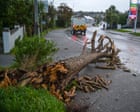
October 23, 2026Dozens of schools in Cornwall also affected by conditions as another storm heads for Scotland, Northern Ireland and the north of England
Thousands of homes are without power and schools have been closed as the first named storm of the year hit UK shores.
Storm Austen brought severe conditions to parts of the south-west, with a gust of 76mph recorded at St Mary’s airport on the Isles of Scilly on Friday morning. Just before 11am, more than 16,000 homes in the south-west were without power, according to National Grid.
Continue reading… [...]
Read more...
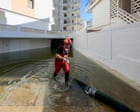
October 23, 2026Storm Adam brings heavy rain to Valencia, Alicante and Balearic Islands, as Storm Austen gusts strike England and Wales
Storm Adam brought torrential rain to eastern Spain earlier this week. In Pego, Alicante, 632mm fell in 36 hours with 430mm of this falling in just six hours, while the Valencian town of Olivia received 600mm in 24 hours. As a result, 145 municipalities, approximately 850,000 people, across Valencia and Alicante were placed in a temporary lockdown on Monday due to the severe flooding.
At least five people have died and 500 have been rescued and 2,100 evacuated. The storm also affected the Balearic Islands, with more than 130 incidents recorded in Ibiza including standing water at the airport, which caused some flights to be diverted or suspended. Although the worst of the storm has passed and conditions improving across Valencia and Alicante, local disruption is expected to continue.
Continue reading… [...]
Read more...

October 22, 2026Storm Austen | Interpreting Hokusai | NI for pensioners | Creative car names | Queue for the Bayeux
I was delighted to see that the first storm of the season is called Austen (Report, 20 October). I envisaged that its successors might be named after the Brontë sisters, Dickens and other notable British novelists. But my excitement soon subsided when I read that Storm Austen has been named not for Jane, but Austen Nagle, the first director of the Met Office.
Christine Shuttleworth
London
• Jonathan Jones rightly praises the new exhibition of Hokusai’s work in Dulwich (Hokusai: Thirty-Six Views of Mount Fuji review, 19 October). But in Japan the work is read from right to left. We go with the power of the wave, but if you reverse the print, the wave appears even more dangerous.
David Cockayne
Warrington, Cheshire
Continue reading… [...]
Read more...
October 22, 2026With no wind to disperse the low cloud, mist and fog and less sunlight to burn it off, anticyclonic gloom can set in
In summer, a high-pressure system over the UK usually means fine weather. But in the colder months it can result in anticyclonic gloom, characterised by grey skies, mist, fog and drizzle.
A settled high-pressure system brings stable conditions and impedes the usual vertical movement of air. This is a recipe for sunshine when humidity is low, but can act like a lid, trapping atmospheric moisture near the surface.
Continue reading… [...]
Read more...

October 21, 2026Wind and solar generate a growing share of UK electricity, as weather continues to shape energy market prices
nathan.reece@r…
21 October 2026
The Royal Meteorological Society’s third annual State of the Climate for the UK Energy Sector report examines the influence of weather on electricity generation, prices and supply interruptions from 1 April 2025 and 31 March 2026.
Wind and solar provided 38.2% of electricity generated for the UK grid during the reporting period covered by the latest State of the Climate for the UK Energy Sector report, up from 33.3% in the previous report.
Published by the Royal Meteorological Society (RMetS), the third annual report examines how weather conditions affected the UK’s energy sector over the reporting period. Its findings illustrate how changes in weather can influence renewable electricity generation, the mix of energy sources used to meet demand, and electricity prices.
Despite the increased contribution from wind and solar, periods of unfavourable weather continued to coincide with significant changes in the make-up of our electricity generation and market prices.
In early January 2026, a cold spell coincided with increased electricity demand and reduced renewable generation, leading to a spike in real-time electricity prices.
In early October 2025, a prolonged period of very low winds reduced wind-power generation, leading to increased reliance on gas-fired generation and a further electricity price spike.
The findings highlight the importance of understanding how weather conditions interact with electricity demand and the availability of different generation sources, particularly as wind and solar account for a growing share of the UK’s electricity.
Weather also continued to cause interruptions to customer electricity supplies. The largest weather-related interruptions during the reporting period were associated with wind and precipitation from named storms, including Storm Floris in August, Storm Amy in October and Storm Claudia in December. Other regional impacts included snow associated with Storm Goretti in the Midlands on 8–9 January, heat across England in July, and lightning strikes from thunderstorms during the summer and autumn.
Professor Liz Bentley, Chief Executive of the Royal Meteorological Society, said:
“As the UK’s energy system evolves, it is important that we continue to build our understanding of how weather affects the sector. By tracking these impacts year on year, we can strengthen the evidence base available to businesses and policymakers, supporting informed decisions about the future of our energy system.”
The report provides an annual assessment of weather-related impacts on the UK energy sector, helping to build an evidence base for understanding the relationship between weather, electricity generation, market conditions and the reliability of energy supplies.
The State of the Climate for the UK Energy Sector is an annual report produced by the Royal Meteorological Society. This third instalment continues the Society’s work to document the effects of weather on the UK’s energy sector.
View an Executive Summary and download the full report
21 October 2026 [...]
Read more...
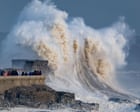
October 20, 2026Yellow severe weather warning issued for first named storm of season with gusts of up to 60mph expected
The first named storm of the season, Austen, is expected to bring gusts of up to 60mph to southern areas of the UK at the end of the week, forecasters said.
While there would be spells of rain and showers for many on Tuesday and Wednesday, by Thursday Storm Austen would be approaching the south-west of the UK, the Met Office said.
Continue reading… [...]
Read more...

October 15, 2026The ‘Great Fall’ of 1965 was caused by harsh conditions forcing migrating species to land on their way to Africa
My birding mentor, the late Derek Moore, was also a keen cricketer. But one autumn day in 1965 he was unable to concentrate while fielding because many hundreds of songbirds were landing around him on the pitch at Lowestoft.
The arrival of hundreds of thousands of birds along the Suffolk coast that day became known as the “Great Fall”, and it was caused by a weather system bringing cloud, winds and heavy rain.
Continue reading… [...]
Read more...

October 10, 2026With an extremely wet and windy winter forecast, take steps to keep you and your home safe and dry
With the Met Office warning that this year’s supersized El Niño could mean a wet and stormy winter lies ahead, it’s never been more important to maintain your home.
Payouts for storm damage to UK homes surged 32% to £244m in 2025 amid the destruction caused by the heavy rain and strong winds that accompanied the likes of Storm Éowyn and Storm Floris.
Continue reading… [...]
Read more...
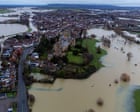
September 30, 2026Environment Agency warns residents of 6m properties to prepare for a wet and windy three months ahead
More than two million people in England are unaware their properties are at risk of flooding, as the UK braces for a wet and stormy start to the winter, according to the Environment Agency.
Experts say the next three months are more likely than usual to be wet and windy – due to a combination of large-scale weather patterns and the “subtle” impact of a supercharged El Niño – increasing the risk of flooding.
Continue reading… [...]
Read more...

September 30, 2026Welcoming New RMetS President Emily Shuckburgh CBE
nathan.reece@r…
30 September 2026
Please join us in welcoming Professor Emily Shuckburgh CBE as the new President of the Royal Meteorological Society. Emily formally takes office on 1 October 2026.
President Emily Shuckburgh CBE was appointed the Chief Scientific Adviser for the Department for Energy Security and Net Zero (DESNZ) in November 2025.
She is Professor of Environmental Data Science at the Department of Computer Science and Technology at the University of Cambridge.
Emily, a mathematician and climate scientist and a Fellow of Darwin College, Cambridge, is also a Fellow of the Cambridge Institute for Sustainability Leadership, a Fellow of the British Antarctic Survey, a Fellow of the Royal Geographical Society (FRGS), and an Honorary Fellow of the Energy Institute (HonFEI).
At the University of Cambridge, she is Academic Director of the Institute of Computing for Climate Science, and co-Director of the Centre for Landscape Regeneration and of the UKRI Centre for Doctoral Training on the Application of AI to the study of Environmental Risks (AI4ER).
She worked for more than a decade at the British Antarctic Survey where her work included leading a UK national research programme on the Southern Ocean and its role in climate. Prior to that she undertook research at École Normale Supérieure in Paris and at MIT.
She is co-author, with HM King Charles III and Tony Juniper, of the ‘Ladybird Book on Climate Change’.
Emily was awarded an OBE in 2016 and a CBE in 2025.
Regarding her election, Emily Shuckburgh CBE said:
“It is an honour to take on the role of President of the Royal Meteorological Society at a time when the impacts of extreme weather and climate change are increasingly being felt, and trusted science and expert advice have never been more important.
“The Society helps to ensure world-leading weather and climate knowledge supports people to make informed decisions, strengthening resilience and contributing to a sustainable world where people and nature can flourish.”
Departing President Brian Golding OBE
As we welcome Emily to the Society, we would also like to take the opportunity to thank our departing President, Brian Golding OBE.
Professor Liz Bentley, RMetS Chief Executive, said:
“I would like to express my sincere thanks to our outgoing President, Brian Golding, for his leadership, commitment and contribution to the Society. Brian has been a tremendous advocate for our community and our mission, and we are enormously grateful for everything he has done during his presidency.”
Brian Golding OBE said:
“It has been a great honour to preside over the Royal Meteorological Society during this period in which the independent voice of the Society in weather and climate education, policy and professional standards is of greater importance than ever before. It has been an exciting time to be involved as the scope of the meteorological sector evolves and broadens, with a growing role for interdisciplinary science and rapid progress in the application of AI.”
1 October 2026
RMetS – General [...]
Read more...
September 28, 2026RMetS and RAS join forces with ACCSN for Black History Month
Aminat.Olasunk…
28 September 2026
The Royal Meteorological Society (RMetS) and the Royal Astronomical Society (RAS) are joining forces this Black History Month to strengthen collaboration and knowledge exchange around equity, diversity and inclusion (EDI) across the science community.
As part of this new partnership, RMetS and RAS have both signed up to support the Afro-Caribbean Commercial Science Network (ACCSN), an organisation dedicated to raising the black and ethnic representation in the commercial science industry.
The partnership will begin with a joint social media campaign throughout October, highlighting opportunities and encouraging people from Black and ethnic communities to engage with science and the organisations and networks that support it. The campaign will also lay the foundations for events and other collaborative activities planned for 2027 and beyond.
But why does representation in weather and climate science matter?
Weather and climate affect everyone. From extreme rainfall and heatwaves to changing patterns of drought, flooding and food production, decisions about how society understands and responds to our changing atmosphere have consequences for every community.
This means everyone should have a voice in the science that informs those decisions, as well as in discussions about how society manages their impacts.
For RMetS, improving diversity and inclusion is therefore not simply about who works in meteorology or climate science. It is also about ensuring that the people contributing to research, developing services, communicating risk and shaping future responses reflect the breadth of the communities affected by weather and climate.
Greater participation from people who have historically been underrepresented in science can bring different experiences, perspectives and questions to the field. It can also help ensure that the benefits of weather and climate science reach – and are relevant to – the widest possible range of people.
Working with organisations such as the RAS and ACCSN provides an opportunity to build connections beyond the traditional boundaries of individual scientific disciplines and to learn from others who are working to improve representation in science.
“Black History Month provides an important opportunity to reflect on who is represented within our scientific communities and whose voices are being heard,” said Ella Clarke, Head of Business Development at RMetS. “Weather and climate affect every part of society, so it is important that people from all backgrounds feel that there is a place for them in our community and that they can contribute to the conversations and decisions that shape our future.”
Daniel Similaki, Founder of the Afro-Caribbean Commercial Science Network (ACCSN), said:“The ACCSN is delighted to welcome the Royal Astronomical Society and the Royal Meteorological Society as Bronze Sponsors.
Both organisations are taking meaningful steps to strengthen diversity and inclusion, and their sponsorship of the ACCSN will help extend that commitment beyond their own organisations and across the wider astronomy, space, geophysics, weather and climate sectors they represent.
Through this partnership, we will focus on community engagement, talent attraction and networking, creating opportunities to connect underrepresented talent with these sectors and their professional communities.”
The partnership with RAS and ACCSN is an early step in a longer-term programme of collaboration. Through knowledge exchange, events and new opportunities for engagement, we hope to help create stronger connections between people and organisations across the science sector.
Follow RMetS on LinkedIn throughout October to take part in the Black History Month campaign and find out more about the opportunities available through ACCSN and the wider scientific community.
5 October 2026
RMetS – General [...]
Read more...
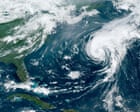
September 24, 2026The weather pattern is associated with extreme, stormy weather, but authorities predict a quiet year in one ocean at least
‘Supersizing before our eyes’: UN warns of record El Niño approaching
One significant effect of the stronger El Niño is fewer hurricanes in the Atlantic. In the 30 years to 2020, on average the first hurricane arrived by 11 August, the second by 26 August and the third by 7 September. This year the total so far has been zero.
At the start of the season, the National Oceanic and Atmospheric Administration (NOAA) predicted a quiet year, anticipating between three and six hurricanes, well below the average of seven. The August forecast cut the expected number to between two and six. Until this year, the latest date for the first Atlantic hurricane was 11 September, in 2002 and 2013.
Continue reading… [...]
Read more...

September 23, 2026Back from university | Nick Clegg’s windfall | Ties at school | Daniel Thomas | Monty Don | Weather forecast
Gaby Hinsliff talks about students boomeranging as a negative (Think it’s time for gen Z to ‘grow up’? You’re even more out of touch than the British state, 18 September). Our daughter came back to live with us after four years of university while she collected her thoughts and planned her next steps. This boomerang year was a rewarding experience that we all welcomed and wouldn’t have missed. Enjoy it!Steve BeioleyFrance Lynch, Gloucestershire
• Maybe Nick Clegg should use his windfall to help all those he let down in 2010 after failing to try to abolish student loans (Nick Clegg could make £30m windfall from datacentre startup Nscale flotation, 22 September).David ShannonAshton under Hill, Worcestershire
Continue reading… [...]
Read more...
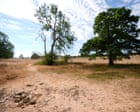
September 21, 2026The number of potentially damaging environmental incidents triggered by this year’s hot and dry weather has surpassed that of 2025
Wildlife in England and Wales will be affected by the current drought for years to come, the government has said.
This summer saw large parts of England and all of Wales plunged into a serious drought, with both recording their driest Julys since records began in 1836.
Continue reading… [...]
Read more...

September 19, 2026Much of the UK is still in drought after its hottest summer on record, but grasslands are slowly recovering their colour
The landscapes of southern England and Wales are slowly regaining their colour after this summer’s extreme heat.
The UK’s hottest summer on record left the south of the country dried out and brown, making the impact of the drought particularly visual.
Continue reading… [...]
Read more...

September 15, 2026One of the biggest upheavals in a millennium is on its way, strengthened by the climate crisis. We need leaders who make things better not worse
If you think you have heard enough about the growing “super” El Niño, trust me, you are going to hear a lot more. What is happening in the equatorial Pacific is jaw-dropping and could well mark one of the biggest global weather upheavals in a millennium. It will spawn a string of weather catastrophes around our world in what remains of this year and in 2027, and there is no reason to think the UK will be immune.
To recap briefly, El Niño involves a heating of the central and eastern equatorial Pacific ocean. It happens every few years and is part of a natural cycle termed the El Niño southern oscillation, which switches between warm (El Niño) and cool (La Niña) phases. El Niños that see heating reach or exceed 2C are defined as “super” but this one, which is forecast to top-out at an astonishing 4C later this year, is so much bigger, the term “hyper” might be more appropriate.
Bill McGuire is professor emeritus of geophysical and climate hazards at UCL. His latest book is The Fate of the World: A History and Future of the Climate Crisis
Continue reading… [...]
Read more...

September 13, 2026The complacency is staggering: just another hot summer, a flooded street, a crop failure. We are accepting this extraordinary deterioration as normal
Recently, I overheard a conversation in a cafe where someone described their toast as “awesome”. I felt myself bristle. Not because the toast wasn’t good – I didn’t taste it – but because I remember a time when “awesome” meant something that inspired awe: towering mountains, the vastness of the night sky, the haunting song of a humpback whale. Now it’s being used to describe breakfast.
“Fantastic” has met the same fate, shedding its fantastical origins to become a synonym for “great”. Meanwhile “literally” has been so thoroughly abused that it can now mean something that is, quite literally, not literal.
Continue reading… [...]
Read more...

September 11, 2026Margaret Squires responds to an article about the wartime meteorologist James Stagg, whose work is dramatised in a new film
Is there any chance of getting a weather tsar in the model of Group Capt James Stagg, the wartime meteorologist, to adjudicate between weather forecasts (How meteorologists recreated weather that helped decide second world war, 8 September)? Suppose I were holidaying in Fort William this week and really wanted to climb Ben Nevis on Thursday. According to the BBC forecast on Wednesday, the worst I could expect would be light rain, and if this was coming up to the end of my holidays, I might go for it. I might not know about the Mountain Weather Information forecast or the Norwegian forecast, which would make it clear that I was in for a soaking.Margaret SquiresSt Andrews, Fife
• Have an opinion on anything you’ve read in the Guardian today? Please email us your letter and it will be considered for publication in our letters section.
Continue reading… [...]
Read more...

September 10, 2026Health secretary says extreme demand no longer confined to winter as service in England warns of knock-on effects
The NHS faced the “busiest summer in its history” as the UK experienced a series of heatwaves, health officials have said, while the waiting list for routine hospital treatment in England has risen to its highest level for nine months.
The health secretary said “extreme demand” on the service was “no longer confined to winter” and NHS leaders warned that the service had “never gone into winter on the back of such a heavy summer”.
Continue reading… [...]
Read more...

September 10, 2026Artificial intelligence system delivers a three-day forecast as accurate as previous two-day predictions
Google’s WeatherNext AI model is better than existing systems at forecasting cyclones, according to a paper published in Nature.
The AI-based technology gives an extra day of warning, providing a three-day forecast for hurricanes or typhoons that is as accurate as previous two-day predictions.
Continue reading… [...]
Read more...
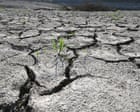
September 10, 2026Temperatures reached 1.65C above preindustrial levels, months before El Niño system reaches full strength
August was the joint-hottest month ever recorded around the world, with global temperatures reaching 1.65C above preindustrial levels, scientists said on Thursday, amid warnings of further heating on the way.
August 2026 tied with July 2023 for the hottest month ever recorded, according to the EU’s Copernicus Climate Change Service. Sea surface temperatures also soared to their highest levels on record for August.
Continue reading… [...]
Read more...
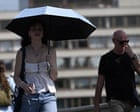
September 1, 2026Meteorologists say average mean temperature of 16.5C was made 130 times more likely by climate crisis
This year’s summer was the UK’s hottest on record, according to provisional data, and the Met Office said the season’s mean temperature was made 130 times more likely by the climate crisis.
Record-breaking and back-to-back heatwaves have scorched much of Europe. In England, temperatures peaked at 38.1C (100.1F) at Kew Gardens in London on 13 August, and June had already been confirmed as the country’s hottest since records began in 1884. Scientists have said these heatwaves are only possible because of the climate crisis driven by burning fossil fuels.
Continue reading… [...]
Read more...
September 1, 2026Introducing the RMetS Member Portal: a new destination for weather and climate knowledge
nathan.reece@r…
01 September 2026
Today, the Royal Meteorological Society announced the launch of the new RMetS Member Portal – an exclusive online destination bringing together expert views, commentary, and knowledge from across the weather and climate community.
Created as a new benefit of RMetS membership, the Member Portal provides members with access to a growing collection of original articles, interviews, analysis, and resources exploring weather and climate from a range of perspectives.
The Portal brings together contributions from researchers, practitioners, and other experts, covering the science, its applications, and the ways weather and climate influence society. Content includes expert interviews, blogs, career spotlights, event recordings, and more, offering something for everyone from the ardent enthusiast looking to deepen their knowledge to the seasoned academic exploring new perspectives.
Each month, we will explore a different theme through a range of content and perspectives, beginning in September with the evolution of weather forecasting.
Designed to complement the Society’s existing publications, including MetMatters and the Weather journal, the Member Portal provides a way for members to explore topics at different levels of depth – from accessible introductions to emerging issues through to more detailed expert perspectives.
The Portal is an expanding knowledge resource exclusive to all members, supporting continued learning, professional development, and engagement with the latest thinking across our community.
The Member Portal is now available to RMetS members. Log in to explore the latest content and discover your new member benefit.
Exlore the Member Portal
If you’re not yet a member, there’s never been a better time to discover what RMetS has to offer. Join RMetS and enjoy membership from just £18.50 for the rest of the year. You’ll receive full access to the new Member Portal, along with a wide range of exclusive member benefits until the end of the current membership year in December.
Find out more about RMetS Membership
1 September 2026
Membership [...]
Read more...

September 1, 2026Meteorologists release list of monikers for potential storms this season after 40,000 suggestions from public
From a five-year-old weather enthusiast to a beloved animated sheep – the inspiration for the list of storm names for this autumn and winter is wide and varied.
Austen, Boelo and Chloe will be the first named storms of this winter, meteorologists have revealed, after more than 40,000 suggestions were submitted by the public.
Austen Ireland
Boelo (Boo-loh) Netherlands
Chloe UK
Dano (Dah-noh) Netherlands
Evelyn Ireland
Finn UK
Gwendolyn Netherlands
Heather Ireland
Ivy UK
Jade Netherlands
Kilian Ireland
Laoise (Lee-sha) Ireland
Miriam Ireland
Nicola UK
Olaf Netherlands
Phelim Ireland
Ruban UK
Shaun UK
Theo UK
Vesna (Vehs-nuh) Netherlands
Wende (Vhen-duh) Netherlands
Continue reading… [...]
Read more...

August 28, 2026Festivalgoers brave rain and strong winds as ‘unsettled’ conditions expected to last over bank holiday weekend
Heavy rain is expected over the weekend, forecasters have said, with people heading to major music festivals warned of unseasonably strong winds.
That came after large parts of England braced for flooding on Friday. The Environment Agency (EA) issued flood alerts across the Midlands and into South Yorkshire, having earlier sent out a more-serious flood warning in the town of Nelson, Lancashire.
Continue reading… [...]
Read more...
August 27, 2026Environment Agency issues 40 flood alerts across Midlands, Yorkshire and south-east of England
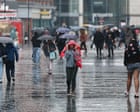
Dozens of homes have been damaged by flooding and the Met Office had issued warnings for thunderstorms and heavy rain at the end of a summer in which most of England and the whole of Wales was declared in drought.
The Met Office said thundery showers in England and Wales could cause 75mm of rain to fall in just 12 hours in some areas.
Continue reading… [...]
Read more...